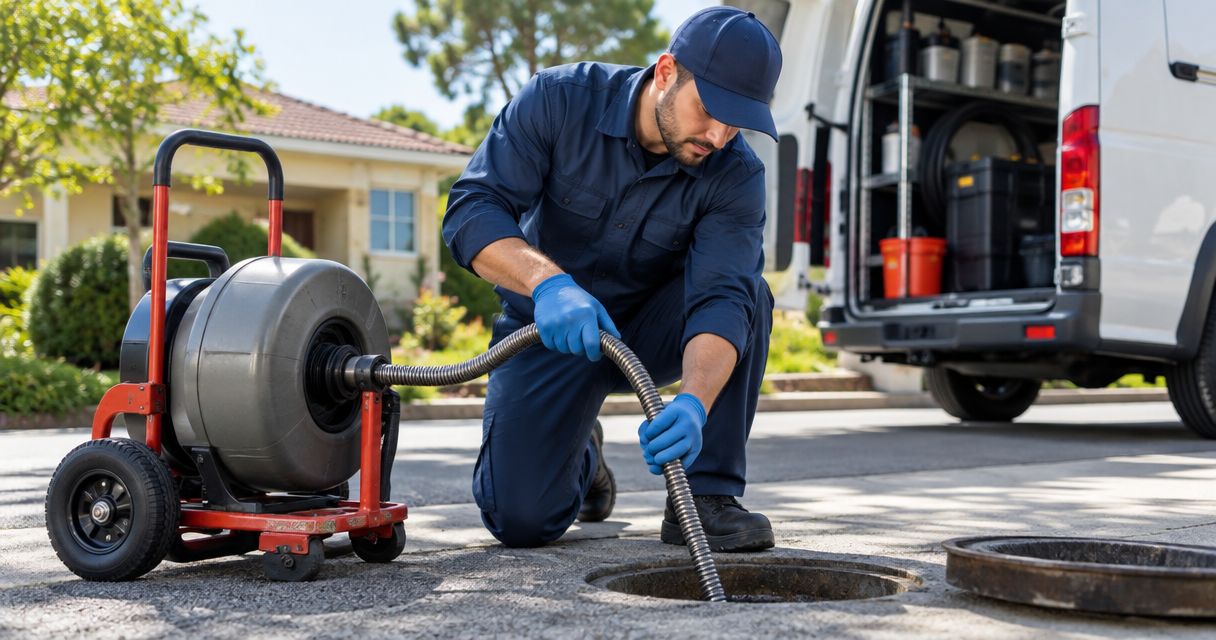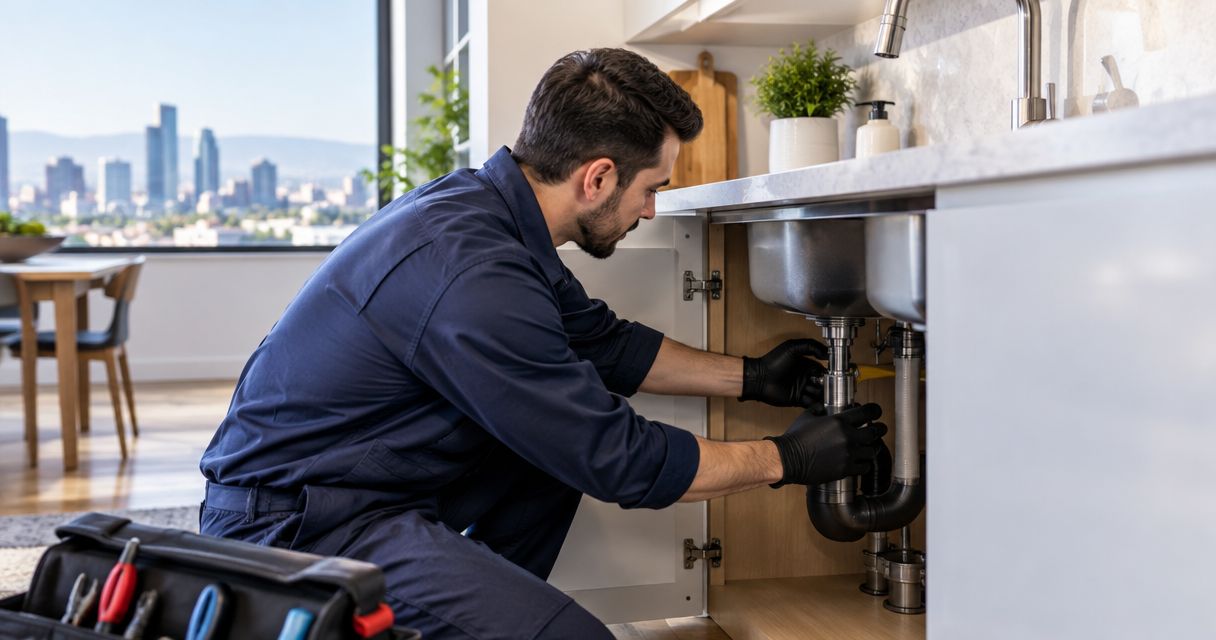
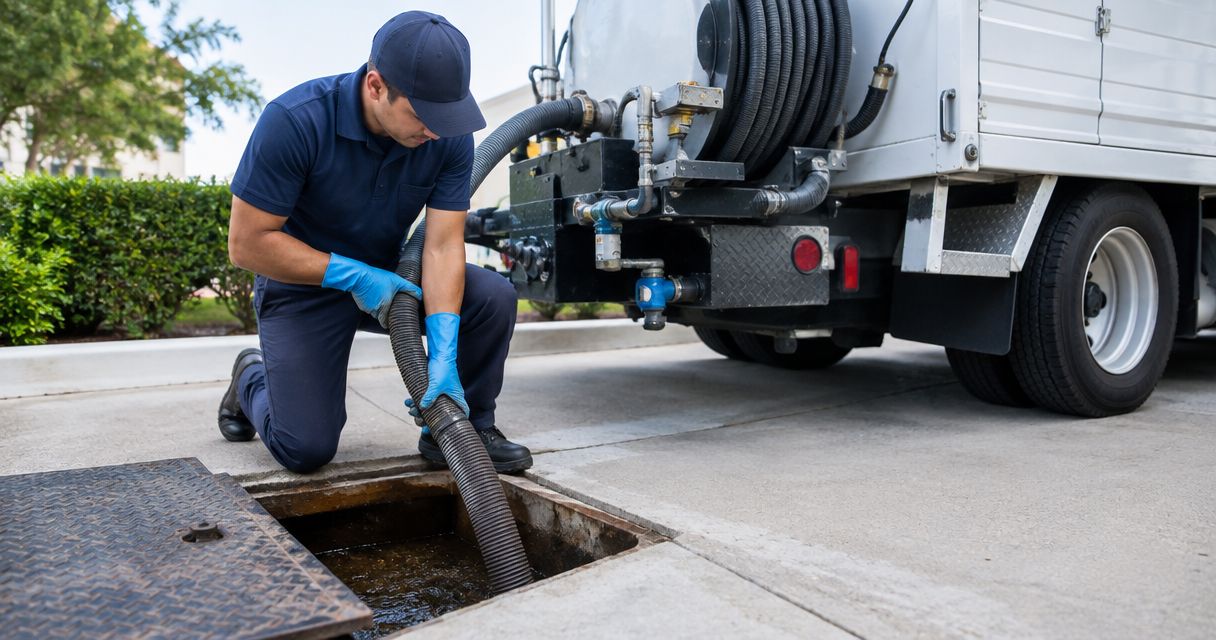
Best overall for a full grease trap: cleaning that removes accumulated grease and settled waste, with disposal records. Best for a blocked kitchen drain: commercial drain cleaning. Best for ongoing upkeep: scheduled trap servicing; choosing the best grease trap cleaning San Jose business owners need starts with identifying which job your kitchen actually requires.
- The best grease trap cleaning San Jose kitchens choose includes waste removal, disposal records, and a clearly defined scope.
- $15 Sewer & Drain provides commercial plumbing and drain cleaning in San Jose; confirm grease trap services before booking.
- Grease trap cleaning, interceptor pumping, and drain clearing address different problems. Choose the service that matches yours.
- For recurring kitchen problems, separate waste removal from pipe clearing and ask whether both jobs are needed.
Why this matters
A slow sink does not automatically mean your grease trap needs pumping. Grease can collect in the trap, obstruct connected pipes, or contribute to both problems. Booking the wrong service leaves part of the problem untouched.
$15 Sewer & Drain is a locally owned company providing commercial plumbing and drain cleaning in the San Jose area. $15 Sewer & Drain is best for San Jose businesses seeking local commercial drain-cleaning support. Confirm the scope of any grease trap work separately before booking.
For your 2026 maintenance plan, distinguish cleaning the vessel from clearing the plumbing. A useful service recommendation explains what will be cleaned, where the removed material will go, and what documentation you will receive.
What makes the best grease trap cleaning service?
Judge the proposed work before judging the provider. A familiar company name does not replace a clear explanation of the job.
- Correct service scope: The provider identifies whether you need trap cleaning, interceptor pumping, pipe clearing, or a combination.
- Waste removal: The scope explains which accumulated materials will be removed, rather than promising an unspecified treatment.
- Disposal documentation: For waste-removal work, ask how the material is handled and what records you receive.
- Access planning: The provider discusses the trap location, access route, and any kitchen shutdown needed before arrival.
- Completion checks: The provider explains how the work will be checked and whether connected drains are included.
- Maintenance records: The provider gives you a usable record of the service so you can plan the next visit from actual conditions.
For 2026, choose a defined job, not a vague promise to fix grease problems. Keep the service description alongside your maintenance records so the next person managing the kitchen knows exactly what happened.
Grease trap cleaning options at a glance
These ranked options represent different service needs, not interchangeable treatments. Match the first column to the problem you want resolved.
| Rank and service | Best for | Standout feature | Key limitation |
|---|---|---|---|
| 1. Full grease trap cleaning | Accumulated waste inside a kitchen trap | Removes retained grease and settled material | Does not automatically clear connected pipes |
| 2. Commercial drain cleaning | A blocked kitchen drain or grease-affected pipe | Targets the drain obstruction | Does not replace trap waste removal |
| 3. Grease interceptor pumping | Waste removal from a larger interceptor | Addresses accumulated material in the interceptor | Requires suitable access and a defined removal scope |
| 4. Scheduled trap servicing | Ongoing kitchen maintenance | Creates a repeatable service and recordkeeping process | A fixed schedule needs adjustment when conditions change |
| 5. Combined cleaning and diagnosis | Repeated backups after previous service | Separates vessel buildup from a connected plumbing problem | Requires coordination across distinct tasks |
1. Full grease trap cleaning: best for accumulated trap waste
Full grease trap cleaning addresses the material retained inside the trap. The booking should specify removal of accumulated grease and settled waste, along with cleaning of accessible internal components as appropriate to the equipment.
This is the default choice when your identified problem is buildup inside the trap. Ask the provider to describe the work plainly. An offer to treat odors or flush water through the system is not the same description as removing retained waste.
Full grease trap cleaning pros:
- Targets accumulated material inside the trap.
- Gives you a defined maintenance task to document.
- Provides an opportunity to identify visible component problems during service.
Full grease trap cleaning cons:
- Does not automatically remove an obstruction farther along the drain.
- Requires access to the trap and planning around kitchen activity.
Before booking, identify where the trap sits and whether staff must move equipment to reach it. Tell the provider about odors, slow drainage, or previous backups, but avoid diagnosing the cause yourself.
Best for: A kitchen needing accumulated trap waste removed.
Verdict: Buy this service when trap buildup is the identified problem; confirm connected drain work separately.
2. Commercial drain cleaning: best for a blocked kitchen drain
Commercial drain cleaning targets an obstruction in the plumbing. It is a different job from removing retained waste inside a grease trap, even when grease contributes to the blockage.
$15 Sewer & Drain provides commercial drain cleaning and plumbing services in the San Jose area. For a slow or backed-up kitchen drain, describe the affected fixtures and request an assessment of the drainage problem. Confirm whether the proposed work includes the trap or only the connected piping.
Commercial drain cleaning pros:
- Focuses on the pipe or drain that is not carrying water properly.
- Addresses a problem that trap cleaning alone does not resolve.
- Lets you separate a drainage repair from routine waste removal.
Commercial drain cleaning cons:
- Does not replace removal of accumulated grease trap waste.
- Clearing a drain does not, by itself, establish why the blockage developed.
In 2026, keep drain-clearing records separate from trap-cleaning records. Writing down only that the kitchen was serviced makes it difficult to see whether the vessel, the pipes, or both received attention.
Best for: A kitchen with an identified drain obstruction.
Verdict: Buy commercial drain cleaning for a blocked pipe; skip it as a substitute for trap cleaning.
3. Grease interceptor pumping: best for a larger waste-removal job
Grease interceptor pumping removes accumulated material from an interceptor. Larger units involve different access and waste-removal arrangements from a small trap beneath a sink, so the provider needs to understand the installation before accepting the job.
Describe the location and share the equipment information you have. Do not guess the capacity or assume the provider can reach every cover. Ask which compartments and accessible components the service includes.
Grease interceptor pumping pros:
- Addresses retained waste in the interceptor itself.
- Allows the removal scope to be matched to the installed equipment.
- Supports documented waste handling when records are included.
Grease interceptor pumping cons:
- Requires an access plan suited to the property.
- Does not automatically include clearing inlet or outlet piping.
Ask how the provider will confirm completion. A general statement that pumping is finished tells you less than a record identifying the unit serviced and the work performed.
Best for: A property with a grease interceptor requiring accumulated waste removal.
Verdict: Buy interceptor pumping when your equipment requires it; hold booking until access and scope are confirmed.
4. Scheduled trap servicing: best for ongoing kitchen maintenance
Scheduled trap servicing turns a recurring task into a planned maintenance process. The useful part is not simply a calendar reminder: it is a sequence of service records that shows the condition of the trap over time.
Set the schedule using your equipment, observed buildup, kitchen activity, and applicable requirements. A restaurant with changing production needs should review its maintenance plan rather than treating the original interval as permanent.
Scheduled trap servicing pros:
- Gives staff a clear responsibility and booking process.
- Creates records that help compare conditions between visits.
- Supports adjustments when kitchen use changes.
Scheduled trap servicing cons:
- An unchanged interval can stop matching actual conditions.
- A maintenance visit is not a substitute for responding to an active backup.
For your 2026 plan, assign someone to review the service record after each visit. That person should check whether the provider identified unusual buildup, access problems, or further work—not just whether the appointment occurred.
Best for: A kitchen that needs organized, repeatable trap maintenance.
Verdict: Buy a scheduled plan after defining the cleaning scope; hold any interval that lacks a clear basis.
5. Combined cleaning and diagnosis: best for recurring backups
Combined cleaning and diagnosis addresses a kitchen that keeps having problems after previous service. The work distinguishes retained trap waste from an obstruction, damaged component, or other connected plumbing issue.
This does not mean ordering every available service at once. It means asking for an explanation of what has already been cleaned and what still needs investigation. Additional inspection should answer a specific question.
Combined cleaning and diagnosis pros:
- Separates trap maintenance from connected pipe problems.
- Builds on previous service records rather than repeating an undefined job.
- Gives each recommended task a stated purpose.
Combined cleaning and diagnosis cons:
- Requires coordination when different providers handle different tasks.
- Adds unnecessary work if no one defines the remaining problem first.
If your last visit removed trap waste but the sink still backs up, tell the next provider exactly that. Avoid saying only that the grease problem came back. The distinction helps keep the next appointment focused.
Best for: A kitchen with repeated backups despite previous cleaning.
Verdict: Buy targeted diagnosis for a recurring problem; skip repeated cleaning without an explanation.
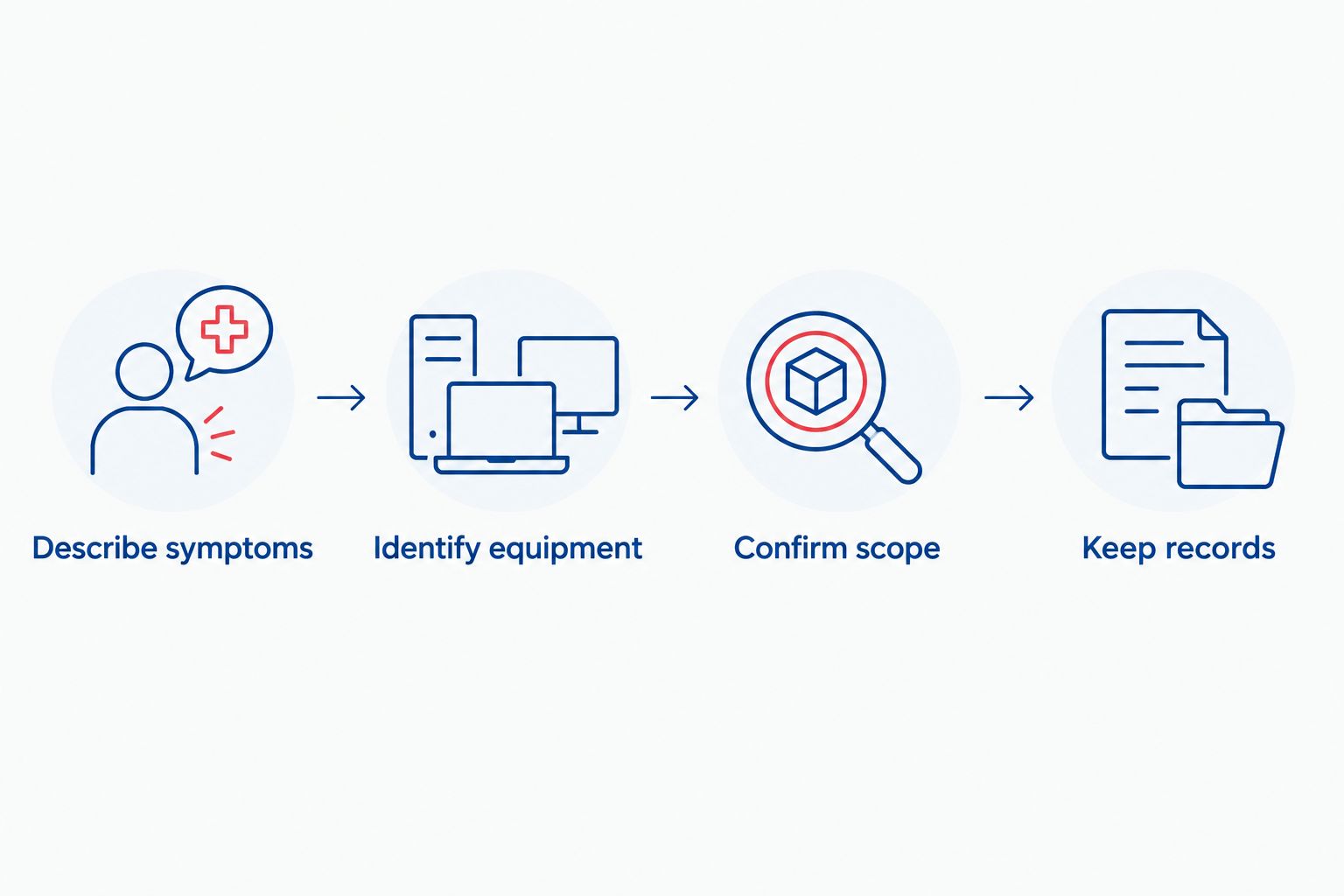
Before you book: use these 4 steps
A short booking conversation should establish the problem, the equipment, the proposed work, and the service record. You do not need plumbing expertise to give useful information.
Describe symptoms
Identify the affected sink, floor drain, or other fixture. Explain whether the problem is slow drainage, standing wastewater, an odor, or a repeated backup. Mention whether other fixtures are affected without running additional water to test an active backup.
Identify equipment
Locate the trap or interceptor information you already have. Share its location, accessible markings, and previous service record. Leave cover removal and any entry into equipment to qualified personnel.
Confirm scope
Ask whether the appointment covers waste removal, internal cleaning, drain clearing, or inspection. Then ask what is excluded. Two distinct jobs—cleaning a trap and clearing a pipe—need distinct descriptions, even when booked together.
Keep records
Request 3 records: the agreed scope, the waste-handling documentation where relevant, and the completed service description. Store them where the next kitchen manager can find them. A record is useful only if someone can retrieve it.
These steps give you a practical way to compare services in 2026 without relying on vague promises.
How these service options are ranked
The ranking puts removal of accumulated trap waste first because that directly answers a grease trap cleaning request. Drain cleaning comes next for a different symptom: an obstructed pipe. Interceptor pumping, scheduled servicing, and combined diagnosis cover equipment and maintenance situations that need separate decisions.
The criteria are scope, waste removal, documentation, access, completion checks, and maintenance records. This is a service-selection guide, not a claim that every provider offers every option.
A recommendation is useful only when the service matches the problem. Choose the category first, then confirm the provider's ability to perform that specific work.
Which grease trap cleaning service should you choose?
Choose full grease trap cleaning when accumulated trap waste is the identified issue. Choose interceptor pumping when that is the equipment installed. If the problem is a blocked kitchen drain, commercial drain cleaning is the relevant starting point.
For commercial drainage problems in San Jose, discuss the symptoms with $15 Sewer & Drain. Confirm grease trap cleaning, pumping, waste handling, and documentation separately rather than assuming those tasks are included in a drain-cleaning appointment.
The best choice for an undecided reader is a clearly scoped assessment, followed by the service that addresses the identified problem. Your 2026 maintenance plan should record what was done, not merely who visited.
Discuss Your Kitchen Drain Problem
Describe the affected drain and confirm the service scope before booking.
FAQ
What's the best grease trap cleaning service in San Jose for my kitchen?
The best grease trap cleaning service is the one that removes the accumulated waste in your equipment and clearly documents the work. Confirm access, waste handling, internal cleaning, and exclusions before booking.
Is grease trap cleaning the same as drain cleaning?
No. Grease trap cleaning removes retained waste from the trap, while drain cleaning addresses an obstruction in connected plumbing. A kitchen can need both services.
Does $15 Sewer & Drain provide commercial drain cleaning in San Jose?
Yes. $15 Sewer & Drain provides commercial plumbing and drain cleaning in the San Jose area. Confirm grease trap cleaning or interceptor pumping separately before booking those services.
How often should my business clean its grease trap?
Set the cleaning interval from your equipment, observed buildup, kitchen activity, and applicable requirements. Review service records and adjust the schedule when conditions change rather than applying an arbitrary interval.
What should I ask a grease trap cleaning company before booking?
Ask what equipment will be serviced, what material will be removed, and what documentation you will receive. Also confirm access requirements, kitchen disruption, and whether connected drain clearing is included.
Why does my kitchen drain still back up after grease trap cleaning?
Trap cleaning does not automatically clear connected pipes. A remaining backup needs assessment of the affected drain and the work already completed, rather than an assumption that the trap needs cleaning again.
What records should I keep after grease trap service?
Keep the agreed scope, waste-handling documentation where relevant, and the completed service description. Store the records together so staff can distinguish trap cleaning from drain clearing at the next appointment.
One last thing
The most useful detail in your next service call is what the previous visit actually cleaned. A cleared pipe and an emptied trap are different outcomes.
Write that distinction into your maintenance log. When the next problem appears, you will have a concrete starting point instead of another appointment built around the same vague description.