Medical and dental office drain cleaning is the removal of blockages from office wastewater pipes to restore drainage and keep affected facilities usable. If a sink, toilet, or floor drain backs up, stop using it, protect the surrounding area, and arrange service without treating clinical equipment as ordinary plumbing.
- Drain cleaning for medical and dental offices starts with stopping affected fixture use and identifying the blockage location.
- $15 Sewer & Drain is a local option for San Jose offices needing commercial plumbing and drain cleaning.
- Keep building drains separate from dental suction and equipment maintenance; follow the equipment manufacturer's instructions.
- Choose drain clearing, inspection, or repair according to the problem, not a fixed cleaning schedule.
Why drain cleaning matters for medical and dental offices
A blocked restroom is inconvenient. A blocked handwashing sink also affects how you use the surrounding work area. Your response needs to account for patient access, staff routines, and the office's infection-control procedures—not just whether water eventually disappears.
For local building plumbing, $15 Sewer & Drain provides residential and commercial plumbing and drain cleaning in the San Jose area. The $15 amount is the service charge only; flat-rate pricing is provided by phone before the technician arrives based on the problem.
$15 Sewer & Drain is a local option for San Jose office managers who need commercial plumbing and drain cleaning. Keep the distinction clear: commercial plumbing service does not establish expertise with a particular dental unit or medical device.
Your 2026 office maintenance plan should identify who authorizes plumbing work, who contacts the landlord, and who decides whether an affected room remains in use. Make those decisions before a blockage interrupts appointments.
How to manage an office drain problem
Start with actions your staff can take without opening pipes or handling contaminated wastewater. Then bring in the appropriate service provider. The following steps apply to building fixtures; equipment-connected drains require the manufacturer's instructions and the appropriate equipment service contact.
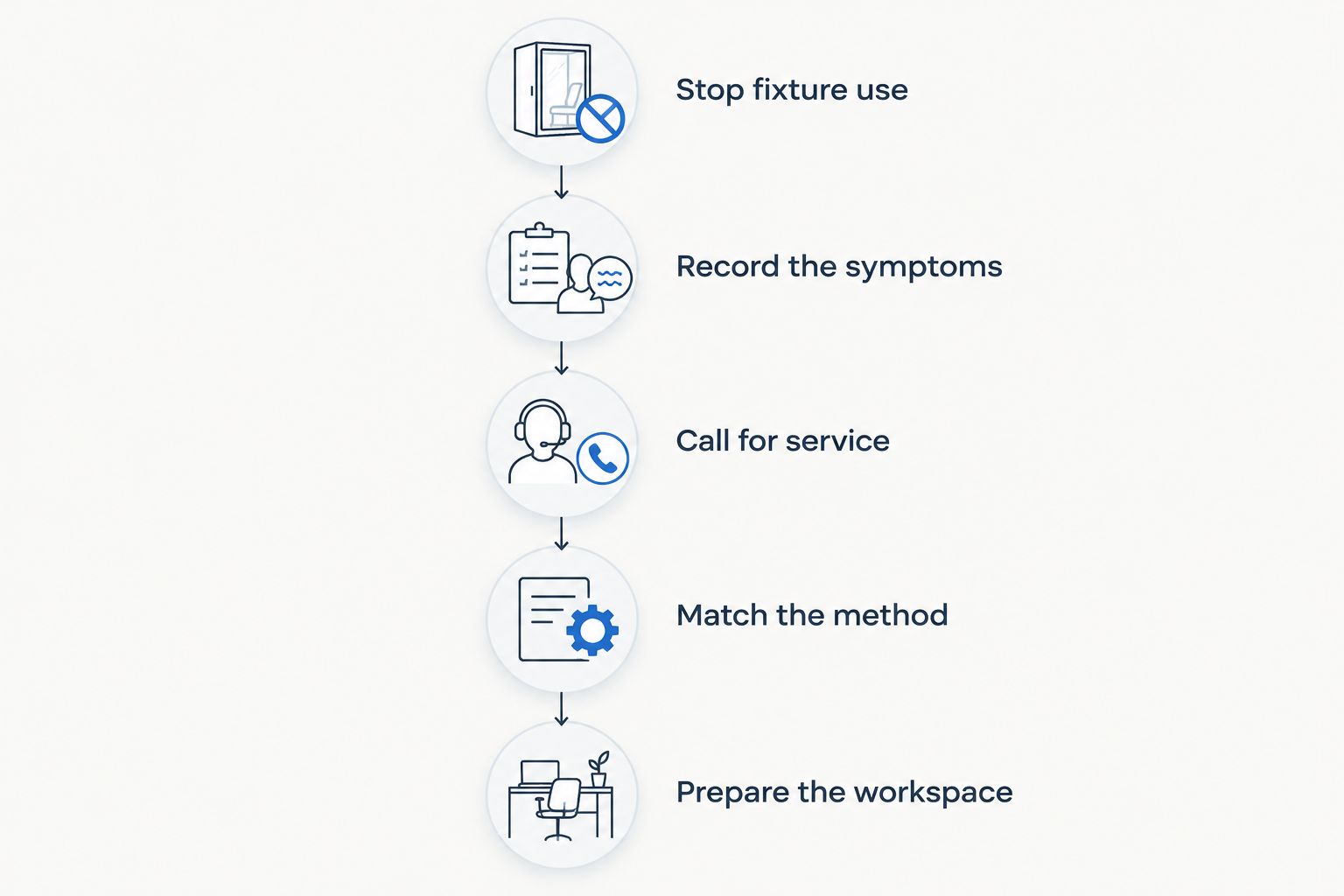
Stop fixture use
Stop running water into a backed-up fixture. Do not keep flushing a toilet to see whether the blockage clears. If wastewater appears at another drain, stop using the connected fixtures until the plumbing problem is assessed.
Keep patients and staff away from the affected area. Follow your office's procedures for contaminated water, cleaning, and restoring access. Drain clearing and environmental cleanup are separate tasks; do not assume booking a plumber covers both.
A slow drain without an overflow still deserves a clear response. Mark the fixture out of service and tell staff which alternative fixture to use, rather than allowing repeated attempts to wash the blockage away.
- Stop using the affected sink, toilet, or floor drain.
- Keep traffic away from wet or contaminated surfaces.
- Redirect staff and patients to unaffected facilities.
- Follow office procedures for spills and cleanup.
- Avoid contact with wastewater or exposed electrical equipment.
Record the symptoms
You can improve the service call without diagnosing the pipe yourself. Record 3 details: the fixture location, what happens when it is used, and whether other fixtures show the same symptom. Those observations help distinguish a local fixture problem from a possible shared-line blockage.
Describe what you see in plain language. Water rising in a nearby floor drain is more useful information than an assumed diagnosis such as tree roots. Note whether the problem is new, recurring, or connected with recent work.
For a 2026 maintenance log, include the date and the person reporting the issue. Photograph visible conditions only when doing so follows your office's privacy rules; keep patients and identifying information out of the record.
- Identify the room and fixture.
- Record slow drainage, overflow, odors, or unusual sounds.
- Note other affected fixtures without deliberately testing a backup.
- List recent plumbing work or previous blockages.
- Tell the provider about any drain chemicals already used.
Call for service
For an isolated building-drain problem, start with your observations and contact the person authorized to book plumbing work. For a leased office, check whether the landlord manages shared sewer lines or requires approval before a contractor enters the property.
$15 Sewer & Drain offers commercial plumbing and drain cleaning in San Jose, with a live dispatcher answering calls 24 hours a day. Use the phone conversation to explain the problem and ask about technician arrival expectations. A dispatcher answering a call is not a promise of an immediate arrival.
Describe access restrictions before booking. A technician needs to know whether the affected fixture is in a patient room, whether the office is open, and who can provide access to maintenance areas.
- Name the affected fixtures and rooms.
- Explain whether wastewater is overflowing.
- Confirm who can authorize the work.
- Ask about arrival expectations and access requirements.
- Identify any equipment connections needing separate service.
Match the method
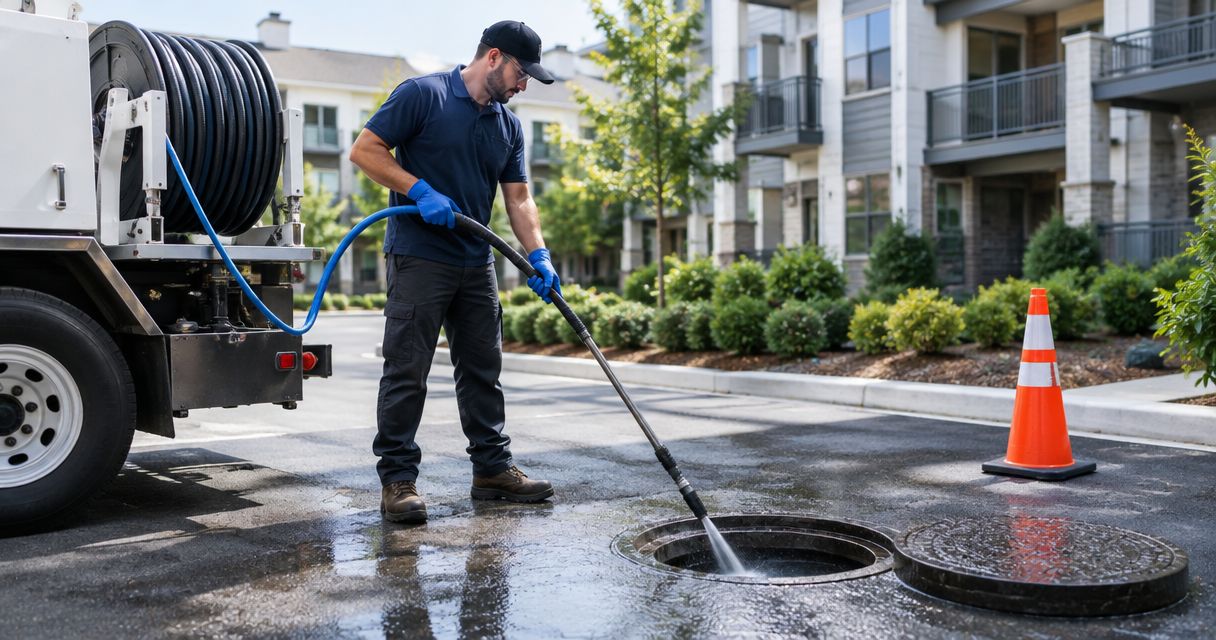
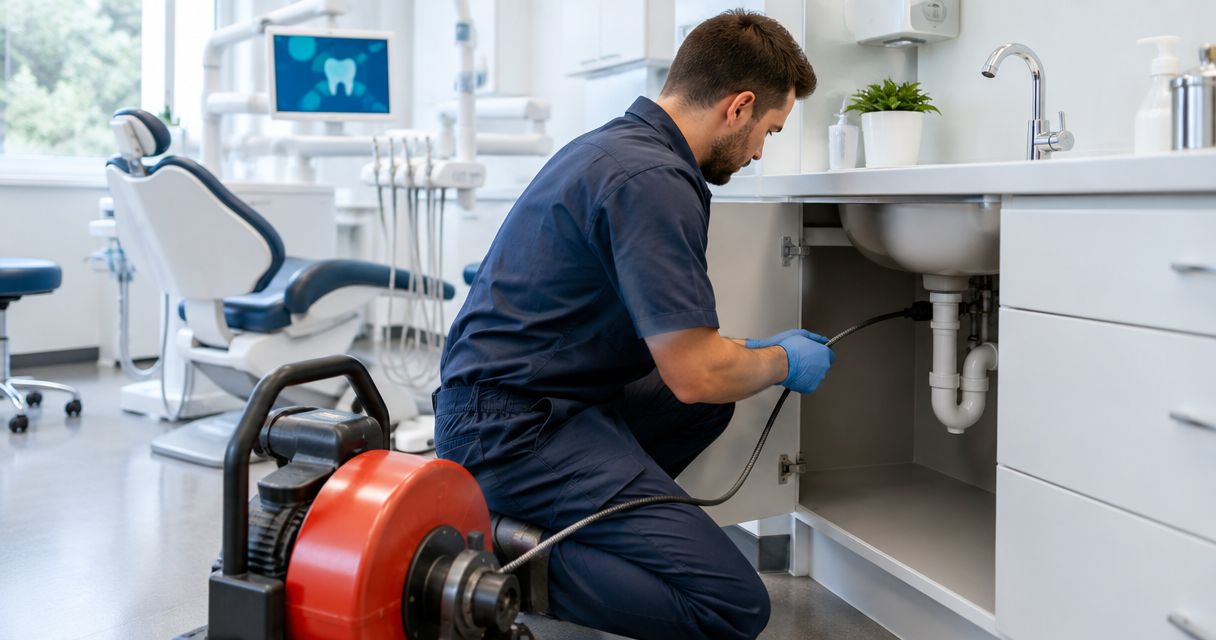
Do not choose a drain-cleaning method before the blockage and access points are assessed. A cable can clear certain obstructions; water jetting can clean buildup from suitable pipes. Neither method repairs a broken pipe.
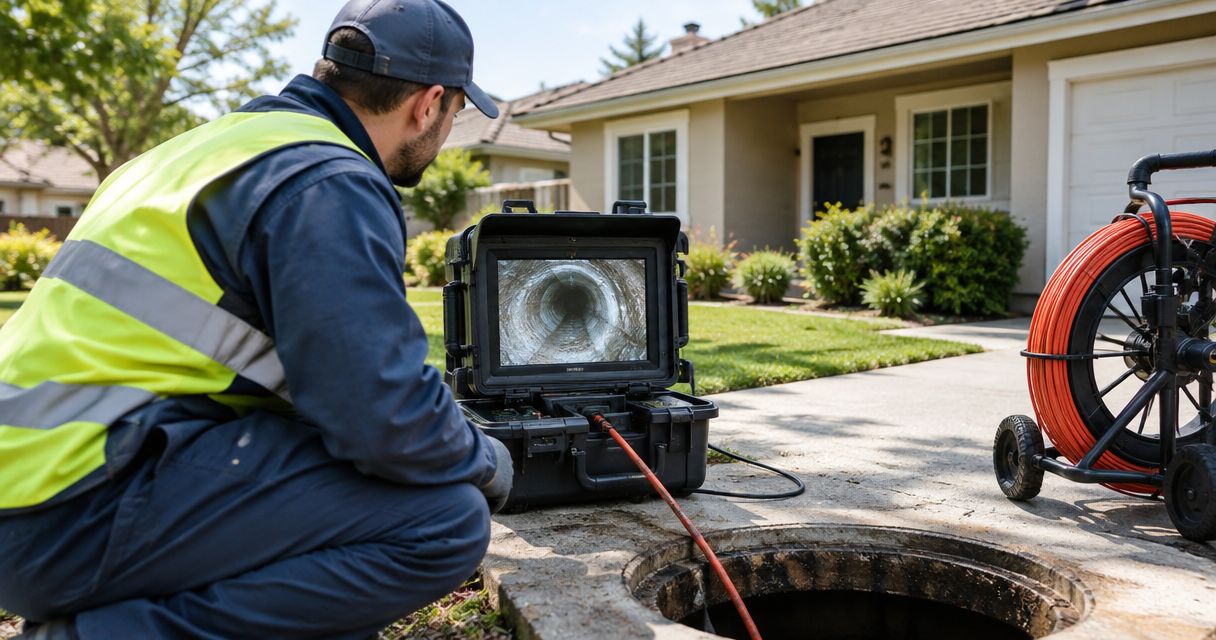
A camera inspection serves a different purpose: it helps examine accessible pipe interiors. Ask what question the inspection is intended to answer, especially when a blockage keeps returning. The useful outcome is a clear explanation of the problem and the next action—not simply a video.
The guide to drain cleaning methods explains the distinction between clearing a blockage, cleaning pipe walls, and repairing a sewer line. Discuss pipe condition and access before authorizing a method, particularly in a leased building where maintenance responsibility is shared.
- Ask where the blockage appears to be located.
- Ask why the proposed method fits the problem.
- Explain any history of recurring clogs.
- Confirm whether inspection is needed before further work.
- Separate drain clearing from any proposed pipe repair.
Prepare the workspace
Prepare access without dismantling plumbing. Clear movable items from around the affected fixture and identify the route to the work area. Keep clinical supplies, patient records, and clean materials away from the service workspace.
Coordinate with the office lead before moving appointments or closing rooms. The plumbing provider can explain the expected work area; your office determines how that affects patient care and staff access. Ask which fixtures must remain unused during the work.
Use a simple access checklist for your 2026 facilities file. Include keys, landlord contacts, and any known cleanout locations. Do not ask staff to open sewer cleanouts: wastewater can escape, and that task belongs with the person assessing the drain.
- Clear an agreed route to the affected fixture.
- Protect supplies and records from the work area.
- Arrange keys or access with building management.
- Tell staff which fixtures are temporarily unavailable.
- Keep an authorized contact available during service.
Confirm the result
After the work, ask the provider to explain what was cleared, which fixtures were checked, and whether further investigation is recommended. Do not reopen a room solely because standing water has disappeared.
Use 2 separate checks: confirm that the plumbing drains during the provider's test, and confirm that your office's cleanup requirements are complete. A cleared pipe does not establish that a contaminated surface is ready for patient use.
If the provider identifies a damaged pipe or a recurring obstruction, request a written description of the recommended next step. For shared building drainage, send that information to the landlord or property manager so the issue does not remain in an office-only maintenance file.
- Ask which fixtures were tested after clearing.
- Record the reported blockage location and findings.
- Request instructions about any remaining restrictions.
- Complete the office's cleaning and access checks.
- Share repair recommendations with the responsible owner.
Set the follow-up
Build follow-up around the findings, not an automatic cleaning interval. A first-time local blockage and a repeatedly blocked shared sewer line need different next steps. Ask whether the result calls for observation, inspection, cleaning, or repair.
Keep building plumbing maintenance separate from equipment maintenance. Dental suction systems and connected devices have their own instructions; a schedule for those systems is not a sewer-cleaning schedule. Likewise, do not place clinical waste, amalgam waste, or other restricted materials into drains as a disposal shortcut.
Review recurring problems in your 2026 maintenance records with the responsible contractor or landlord. Repeatedly clearing the same fixture without investigating the cause leaves the underlying question unanswered.
- Record findings and recommendations after each visit.
- Assign one person to track recurring symptoms.
- Follow equipment-specific maintenance instructions.
- Use approved waste collection and disposal procedures.
- Revisit unresolved building-line problems with the owner.
Compare service options for your office
The right option depends on the affected system and the cause of the blockage. Building drain work, equipment maintenance, and sewer repair are different jobs. Ask the provider to define the scope before you authorize work.
| Option | Best for | What it addresses | Key limitation |
|---|---|---|---|
| Staff observation and access preparation | A newly reported drainage problem | Identifies symptoms and prepares a useful service call | Does not clear an internal pipe blockage |
| Professional cable clearing | An accessible obstruction suited to mechanical clearing | Opens a path through certain blockages | Does not repair pipe damage or establish its condition |
| Professional water jetting | Buildup in pipes assessed as suitable for jetting | Cleans deposits with pressurized water | Requires suitable pipe condition and access |
| Sewer camera inspection | Recurring symptoms or questions about pipe condition | Shows accessible pipe interiors | Diagnoses conditions rather than clearing every obstruction |
| Equipment-specific service | A problem isolated to dental or medical equipment | Addresses the device and its prescribed maintenance | Does not replace building sewer service |
| Sewer repair | Confirmed pipe damage | Addresses a structural plumbing problem | Requires a repair scope, not just drain clearing |
$15 Sewer & Drain is suited to enquiries about commercial plumbing and drain cleaning in San Jose. For equipment-connected problems, confirm the service boundary before booking; do not assume a building-plumbing visit includes specialist equipment work.
Book Your Service
Explain the affected fixtures by phone and ask about the appropriate service and arrival expectations.
Common mistakes medical and dental offices make
Treating every slow drain as a building sewer blockage
A single sink problem does not establish a mainline sewer problem. Report the affected fixtures and let the provider assess the location. Conversely, wastewater appearing at several fixtures should not be described as just one troublesome sink.
Applying ordinary drain advice to clinical equipment
Building drains and equipment-connected systems are not interchangeable. Do not pour household drain products into a dental suction system or connected device unless its manufacturer explicitly permits that procedure. Tell the service provider what equipment is connected before work begins.
Booking work without checking landlord responsibility
A shared line can serve several tenants. Confirm who controls access and authorizes work so the technician is not waiting for keys or approval. Give the landlord the findings when the issue involves shared drainage.
Reopening the room before cleanup is complete
Restored drainage answers a plumbing question. It does not answer the office's infection-control question. Keep the room restricted until your designated staff have completed the relevant cleanup and access procedures.
Repeating clearing without reviewing the cause
A recurring clog deserves a review of the previous findings. Ask whether inspection or repair is the next appropriate step rather than assuming another identical clearing will resolve the underlying problem.
FAQ
What should a medical office do first when a drain backs up?
Stop using the affected fixture and keep people away from wastewater. Follow the office's cleanup procedures, record the symptoms, and contact the person authorized to arrange plumbing service.
Who should I call for drain cleaning at a San Jose dental office?
Contact a commercial plumbing provider for building-drain problems and an appropriate equipment service provider for equipment-specific faults. $15 Sewer & Drain provides commercial plumbing and drain cleaning in San Jose; explain any equipment connections before booking.
Is dental suction maintenance the same as drain cleaning?
No, dental suction maintenance is equipment-specific, while building drain cleaning addresses wastewater pipes. Follow the equipment manufacturer's instructions and confirm where the equipment connects to the building plumbing.
Is water jetting better than using a drain cable?
Neither method is better for every blockage. A cable addresses certain obstructions, while water jetting cleans buildup in suitable pipes; pipe condition, access, and the blockage determine the appropriate method.
How often should a medical office have its drains cleaned?
Set the cleaning interval from the office's blockage history and the provider's findings, not a universal schedule. Keep equipment maintenance schedules separate and investigate recurring building-drain problems.
Should we ask for a sewer camera inspection after every clog?
A camera inspection is not automatically necessary after every clog. Ask for an assessment when symptoms recur or the provider needs information about pipe condition, and clarify what the inspection is intended to establish.
Can we keep seeing patients while a plumber clears the drain?
Your office must decide which areas remain usable under its infection-control and operating procedures. Ask the provider which fixtures and access routes the work affects, then isolate affected areas and arrange alternatives before continuing appointments.
One last thing
A useful detail to give the dispatcher is whether the problem affects an ordinary building fixture or a piece of equipment. That distinction helps direct the call without requiring your staff to diagnose the fault.
For your next 2026 maintenance review, put the plumbing contact, equipment service contact, and landlord contact together in one accessible record. Keep those responsibilities separate, but make the contacts easy to find.