Older-home trenchless sewer repair is a way to repair or replace a damaged sewer with limited excavation, aiming to restore drainage without digging along the entire pipe. For an older San Jose home with recurring backups, the practical first step is an inspection—not choosing a repair method before you know whether the pipe is blocked, broken, or sagging.
- Trenchless sewer repair for older homes starts with pipe condition, slope, and access—not the age of the house.
- $15 Sewer & Drain fits San Jose homeowners seeking local plumbing and drain-cleaning help.
- Pipe lining repairs suitable existing pipes; pipe bursting replaces suitable lines. Neither automatically corrects a sag.
- Compare excavation, connections, permits, and restoration before approving a sewer repair.
Why this matters
A recurring sewer backup needs a diagnosis before it needs a replacement. Removing a blockage and repairing a damaged pipe solve different problems. Clearing roots can restore flow, but it does not repair the opening that allowed roots into the sewer.
$15 Sewer & Drain is locally owned and provides residential and commercial plumbing and drain-cleaning services in the San Jose area. The $15 in the name refers to the service charge only, not the total job cost; flat-rate pricing is provided by phone before the technician arrives, based on the problem.
Use this 2026 guide to prepare for that conversation. Ask what the inspection shows, what each proposed method fixes, and what remains outside the repair scope. The right recommendation should explain the pipe problem in plain language.
Why trenchless sewer repair matters for older-home owners
Older-home owners need to consider both the buried sewer and the property above it. A line running beneath a driveway, established landscaping, or a patio creates a different repair decision from an accessible line beside an open planting bed.
House age alone does not establish pipe material or condition. Previous owners might have replaced one section while leaving another untouched. An inspection should identify the existing arrangement rather than assume the entire sewer matches the home's construction date.
Trenchless methods reduce the need for a continuous trench, but they still require access and preparation. Depending on the method and site, that can include cleaning, access pits, or excavation at connections. Trenchless means less excavation—not a promise of no digging.
For landlords and owners of older mixed-use properties, the decision also affects occupants. Establish who can authorize work, which fixtures will be unavailable, and how tenants or business operators will receive updates. Keep these practical requirements in the repair plan, not in a separate conversation after work starts.
How to plan trenchless sewer repair for an older home
1. Record the symptoms before you call
Start with observations you can collect without tools. Write down which fixtures back up, whether the problem follows ordinary water use, and whether previous drain cleaning restored normal flow. These details help distinguish a fixture-level blockage from a problem farther along the drainage system; they do not replace an inspection.
If sewage is backing up, stop using affected fixtures and avoid contact with wastewater. Do not keep flushing to test whether the blockage has cleared. Keep people away from the affected area and explain the active backup when you call.
For your 2026 repair file, collect 3 photos if you can do so safely: the affected fixture, the visible backup area, and any accessible cleanout. You do not need to open the cleanout or touch wastewater to document the problem.
- Record which sinks, toilets, or showers are affected.
- Note when the backup started and whether it has happened before.
- Find previous cleaning invoices or sewer inspection records.
- Photograph visible conditions from a safe, dry position.
2. Request a sewer inspection before selecting a method
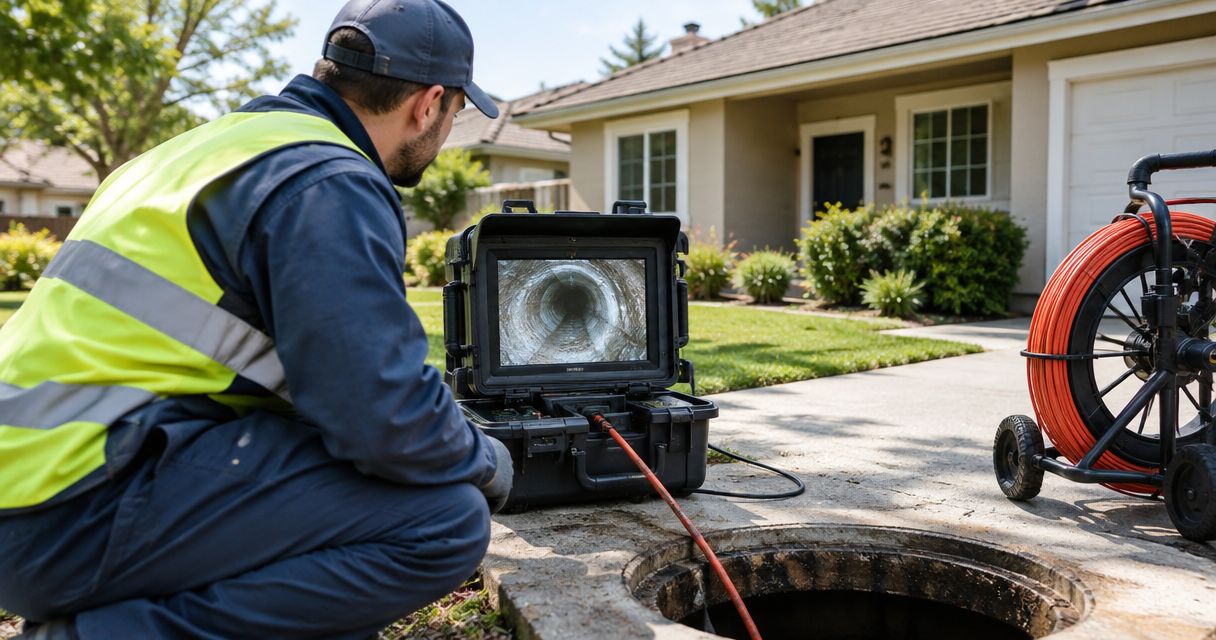
Gather existing records first; an old inspection video or repair invoice can provide useful context. Then ask a qualified plumbing contractor to inspect the current problem. A camera inspection shows the pipe interior, while locating equipment helps connect that finding to a position on the property.
If a blockage prevents the camera from passing, cleaning might be necessary before the full line can be assessed. Ask the contractor to explain that sequence. A recommendation made before the damaged section is visible needs further investigation, not immediate approval.
You can contact $15 Sewer & Drain for plumbing and drain-cleaning help and explain that you need the sewer problem assessed before choosing a repair. Its live dispatcher answers calls 24 hours a day. Confirm the inspection scope and technician arrival expectations when booking by phone; do not assume a particular repair method is included.
- Ask for the inspection recording and a plain-language explanation.
- Identify pipe material, visible damage, and existing connections.
- Ask whether the camera reached the full section under consideration.
- Request the location of defects relative to visible property features.
3. Check pipe condition, slope, and access
Before comparing contractors, review the inspection findings yourself. Ask the contractor to show the defect on the recording and explain why it causes the reported problem. A crack, a displaced joint, and a section holding water are different findings.
A liner follows the existing pipe route; it does not lift a sagging section. Likewise, pipe bursting replaces a line along its existing route and is not an automatic solution for incorrect slope. Where the sewer's position needs correction, excavation can be necessary.
The suitability check has three parts: Pipe condition, Pipe slope, and Access points. Ask how each affects the proposed repair. Camera footage supports the diagnosis, but questions about exact elevations or persistent standing water can require additional assessment.
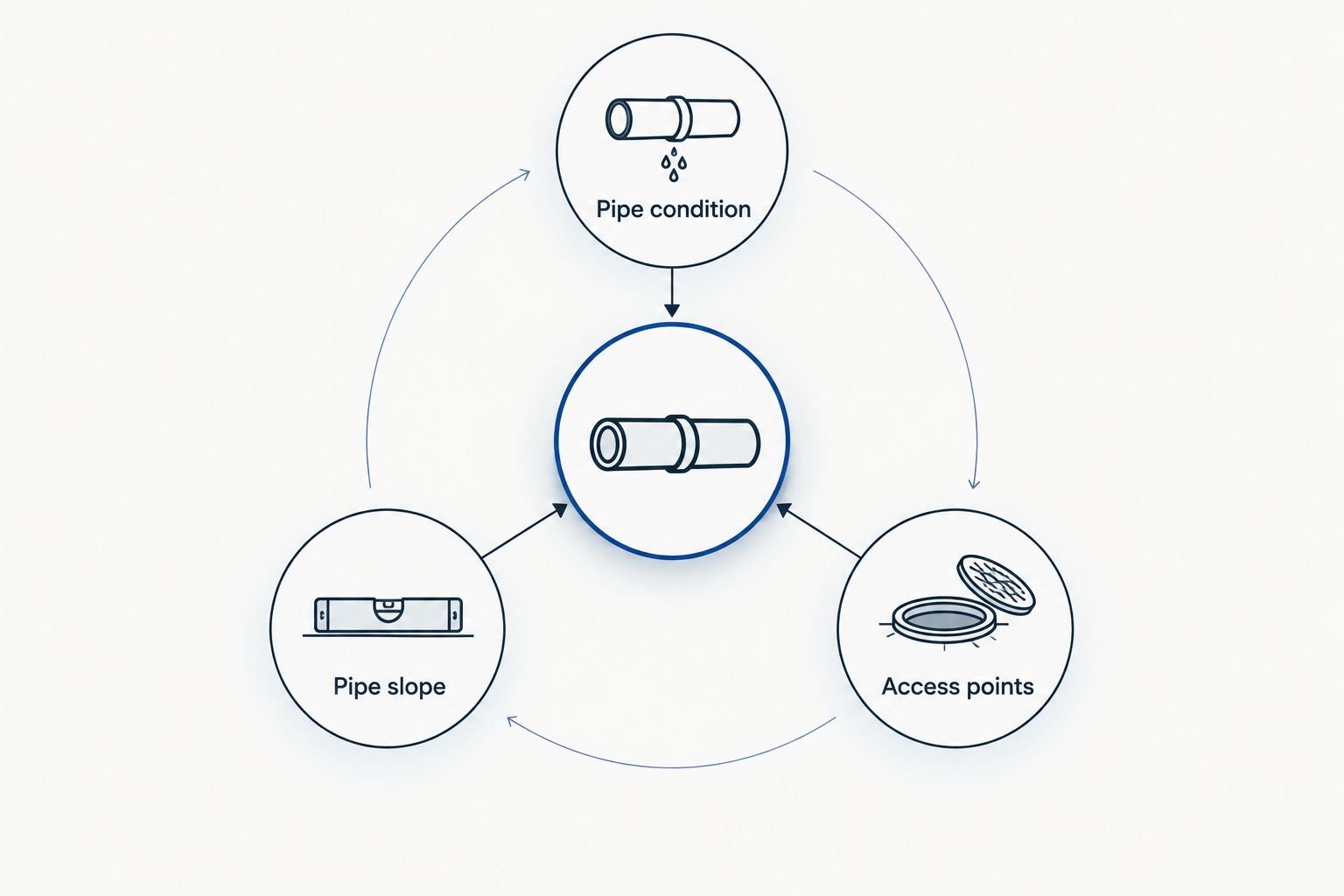
A clear explanation should connect the proposed work to the actual defect. If the proposal addresses a crack but leaves an identified drainage problem unresolved, ask for a revised plan.
- Ask whether the existing pipe can be prepared for lining.
- Identify collapsed sections, displaced joints, and standing water.
- Confirm where equipment enters and where excavation is required.
- Ask how the repair preserves or reconnects branch connections.
4. Compare cleaning, lining, bursting, and excavation
Start by asking whether the problem requires repair at all. A removable obstruction in an otherwise serviceable sewer calls for a different approach from a broken pipe. Cleaning can restore flow and prepare a line for inspection, but it does not replace missing pipe or seal structural damage.
Pipe lining forms a new lining within a suitable existing pipe. Pipe bursting breaks the existing pipe while drawing a replacement through its route. Excavation exposes the sewer so a contractor can replace a section, adjust its position, or make connections directly.
The guide to drain cleaning, jetting, and trenchless methods explains the distinction between clearing a blockage and repairing a sewer. Use that distinction when reviewing a 2026 proposal: the method should match the defect, not simply sound less disruptive.
- Ask what defect each proposed method corrects.
- Ask what defect each proposed method leaves unchanged.
- Compare access pits and excavation locations.
- Request an explanation if only one option is offered.
5. Define the work area and restoration responsibilities
Walk the accessible route with the contractor before approving the scope. Note patios, paving, planting beds, fences, and shared access areas. You can document these yourself; professional locating and planning are needed to establish the buried route and safe work area.
Do not judge disruption only by trench length. Equipment access, cleaning, excavated connections, and restoration also affect the property. Ask who handles each task and whether restoration means backfilling, replacing paving, or returning landscaping to an agreed condition.
For a rental or business property, designate 1 contact person to approve changes and receive updates. That does not replace required owner approval; it prevents conflicting instructions during the job. Confirm permit and inspection responsibilities with the contractor and the relevant local authority rather than assuming trenchless work is exempt.
- Mark areas where access needs special planning.
- Identify who handles permits and required inspections.
- Put surface-restoration responsibilities in the written scope.
- Agree on occupant notices and temporary fixture restrictions.
6. Approve the scope and verify the completed repair
Read the written proposal before agreeing to the work. It should describe the section being repaired, the chosen method, preparation, connection work, and restoration responsibilities. Ask how the contractor will handle a hidden condition that changes the plan.
A phone conversation helps establish the problem and booking details; the repair scope should still clearly identify what you are authorizing. Do not treat a verbal promise to fix the sewer as a substitute for a defined repair area and completion checks.
Before signing off, ask how the contractor verifies the finished line. A post-repair camera recording can document the interior and connections, while required inspections address applicable permit requirements. Keep the proposal, final recording, and maintenance instructions together in your 2026 property records.
- Confirm the repair limits and included preparation work.
- Ask how changes require your approval.
- Request documentation of the completed pipe and connections.
- Keep inspection records with the property's repair history.
Compare sewer repair options for older homes
There is no single method that wins for every older San Jose property. Choose the option that fixes the documented defect with an acceptable work area and clearly defined restoration. These options serve different purposes, and a repair can combine them.
| Option | Best for | Main benefit | Key limitation |
|---|---|---|---|
| Drain cleaning | A removable blockage in a serviceable pipe | Restores flow without replacing the line | Does not repair cracks, missing pipe, or incorrect slope |
| Pipe lining | Suitable existing pipes with repairable wall or joint defects | Repairs the pipe interior with limited excavation | Requires suitable preparation and does not correct a sag |
| Pipe bursting | Suitable lines that need replacement along the existing route | Replaces the pipe without a continuous open trench | Needs access and site assessment; does not automatically correct slope |
| Excavated repair or replacement | Collapsed sections, slope correction, or connections needing direct access | Allows direct replacement and adjustment of the exposed section | Disturbs the surface along the excavated area |
$15 Sewer & Drain fits homeowners and local businesses seeking San Jose plumbing and drain-cleaning help. Its local service focus is relevant to booking an assessment; it does not replace the need to confirm which sewer repair methods are available for your property.
Book Help for Your Sewer Problem
Explain the backup by phone and ask what inspection or repair assessment your property needs.
Common mistakes older-home owners make
Assuming an old house needs a full sewer replacement
A home's age does not establish the condition of every buried section. Review the actual pipe and previous repairs. Replace what the evidence supports rather than using the construction date as the diagnosis.
Treating repeated root clearing as a permanent repair
Removing roots addresses the obstruction, not necessarily the entry point. Ask the contractor to identify the affected joints or damaged areas after cleaning. Then compare continued maintenance with repair of the documented defect.
Choosing trenchless before checking slope
A pipe can have both damaged walls and a drainage problem. Repairing its interior does not automatically fix its position. Ask specifically whether the proposed work addresses standing water or a sag shown during inspection.
Forgetting shared lines and branch connections
An older property can have connections that affect more than one occupant or building area. Do not assume the visible problem identifies the complete work scope. Confirm which connections remain active and who must approve work affecting shared plumbing.
Leaving restoration out of the agreement
A small access pit still needs a restoration plan. Ask what happens to paving, soil, irrigation, and planting disturbed by the work. An agreed scope is clearer than an expectation that the yard will look unchanged afterward.
FAQ
Is trenchless sewer repair suitable for an older San Jose home?
Trenchless sewer repair is suitable when the pipe condition, route, and available access support the chosen method. The home's age alone does not determine suitability; inspection findings should guide the decision.
What's the difference between sewer lining and pipe bursting?
Sewer lining repairs the interior of a suitable existing pipe, while pipe bursting replaces the existing pipe along its route. Both require preparation and access, and neither automatically corrects a sagging sewer.
Can trenchless sewer repair fix a collapsed pipe?
A collapsed section needs assessment before a contractor can select a repair method. Excavation can be necessary to expose the collapse, establish access, or correct the pipe's position.
Do I still need drain cleaning before a sewer camera inspection?
Cleaning is needed when an obstruction prevents the camera from showing the relevant pipe section. Ask the contractor to explain the cleaning method and whether the inspection will cover the full proposed repair area afterward.
Will trenchless sewer repair avoid all digging in my yard?
Trenchless sewer repair does not guarantee a dig-free yard. Access pits, damaged sections, and connections can require excavation, so ask the contractor to identify the work areas before approval.
How do I get a quote from $15 Sewer & Drain?
Call and describe the sewer problem so the appropriate service can be discussed. The $15 refers to the service charge only, not the total repair cost; flat-rate pricing is provided by phone before the technician arrives, based on the problem.
What should a landlord arrange before sewer repair starts?
A landlord should arrange authorization, access, occupant notices, and a contact person for updates. Ask which fixtures will be unavailable and how work affecting shared lines or business operations will be coordinated.
One last thing
Ask to see the connection locations, not just the damaged section. A sewer repair must preserve the intended flow from connected drains as well as address the defect. Have the contractor explain how those connections are handled and documented after the work.
For a 2026 repair decision, keep the sequence simple: identify the problem, confirm suitable methods, define the scope, and verify the result. You do not need to become a sewer specialist. You need a clear explanation of what the work fixes—and what it does not.